
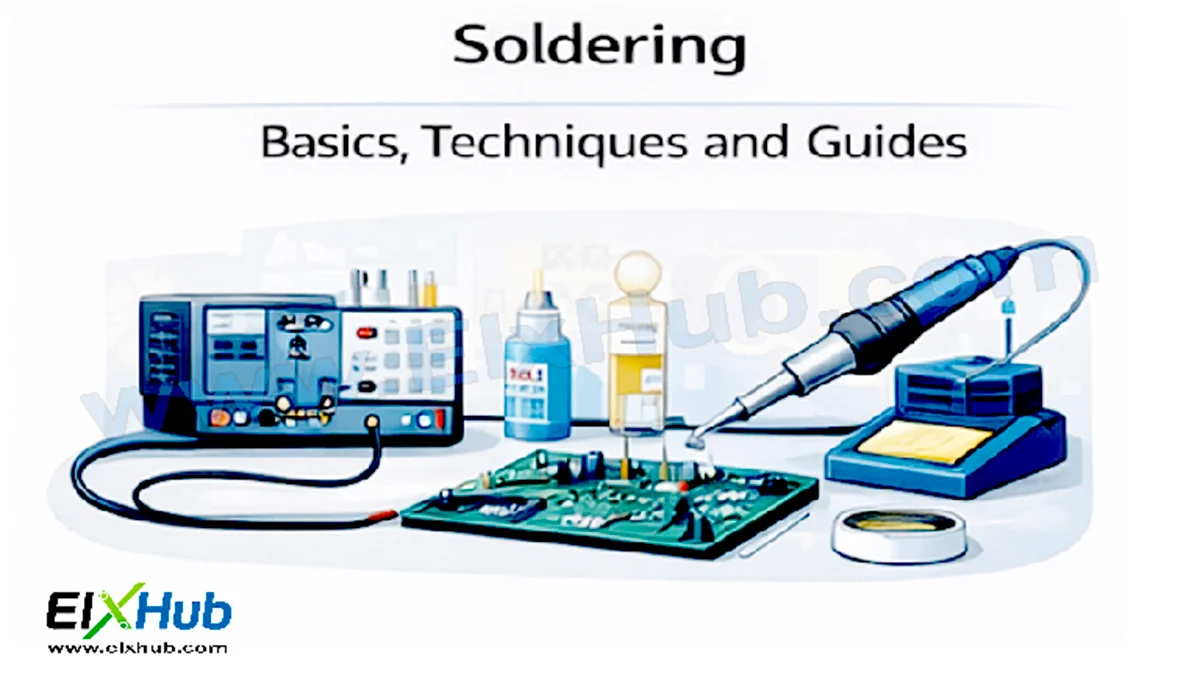
Introduction
Soldering is one of the most fundamental and practical skills in basic electronics. No matter how advanced electronics becomes, soldering remains an essential technique for building, repairing, and maintaining electronic circuits. From simple hobby projects to professional PCB manufacturing, soldering is the process that physically and electrically connects electronic components together.
For beginners, soldering may look intimidating at first because it involves heat, molten metal, and delicate components. However, with proper understanding, correct tools, and good technique, soldering becomes a safe, reliable, and even enjoyable skill. Poor soldering can lead to weak connections, intermittent faults, overheating, and circuit failure, while good soldering ensures durability, reliability, and professional-quality results.
This comprehensive beginner-friendly guide explains soldering basics, tools, types of soldering, correct techniques, common mistakes, safety precautions, and practical tips. By the end of this article, you will have a solid foundation to confidently solder electronic components in your projects.
[Image Placeholder: Clean soldered PCB joints overview]
What Is Soldering?
Soldering is the process of joining two or more metal surfaces by melting a filler metal called solder. The solder flows into the joint and solidifies, forming a strong electrical and mechanical connection.
In electronics, soldering is used to:
- Connect components to printed circuit boards (PCBs)
- Join wires together
- Repair broken connections
- Assemble electronic kits and devices
Unlike welding, soldering does not melt the base metals. Only the solder melts, which makes the process suitable for delicate electronic components.
[Image Placeholder: Basic soldering process diagram]
Why Soldering Is Important in Electronics
Soldering is critical because it:
- Provides reliable electrical connections
- Ensures mechanical stability
- Reduces contact resistance
- Improves long-term circuit performance
A poorly soldered joint can cause:
- Intermittent operation
- Excessive heating
- Noise and signal loss
- Complete circuit failure
This is why soldering quality matters as much as circuit design.
Types of Soldering Used in Electronics
Soft Soldering
Soft soldering is the most common method used in electronics. It uses low-melting-point solder, usually based on tin.
Applications:
- PCB assembly
- Wire connections
- Component mounting
[Image Placeholder: Soft soldering example]
Hard Soldering
Hard soldering uses higher temperatures and stronger filler metals. It is rarely used in electronics but common in mechanical and plumbing work.
Reflow Soldering
Reflow soldering is used in surface-mount technology (SMT). Solder paste is applied, components are placed, and heat is applied using hot air or ovens.
Applications:
- Modern PCBs
- Automated manufacturing
[Image Placeholder: Reflow soldering process]
Soldering Tools and Equipment
Soldering Iron
A soldering iron is the primary tool used to heat the solder and joint.
Key factors:
- Power rating
- Tip shape
- Temperature control
[Image Placeholder: Soldering iron types]
| Power Rating | Typical Use |
|---|---|
| 15–30W | Small electronics |
| 40–60W | General PCB work |
| 80W+ | Heavy-duty soldering |
Solder Wire
Solder wire is the filler metal used to create joints.
Common types:
- Lead-based solder
- Lead-free solder
[Image Placeholder: Solder wire types]
| Solder Type | Composition | Characteristics |
|---|---|---|
| Lead-based | Tin-lead | Easy to use |
| Lead-free | Tin-silver-copper | Environment-friendly |
Flux
Flux removes oxidation and improves solder flow.
Functions of flux:
- Cleans metal surfaces
- Prevents oxidation
- Improves joint strength
[Image Placeholder: Flux application]
Soldering Stand and Sponge
A soldering stand holds the hot iron safely. A wet sponge or brass wool is used to clean the tip.
[Image Placeholder: Soldering stand and sponge]
Desoldering Tools
Used for removing solder:
- Desoldering pump
- Desoldering braid
[Image Placeholder: Desoldering tools]
Understanding Soldering Iron Tips
Different tip shapes serve different purposes.
| Tip Shape | Application |
|---|---|
| Conical | General use |
| Chisel | PCB pads |
| Bevel | Drag soldering |
| Fine tip | SMD work |
[Image Placeholder: Soldering iron tip shapes]
Basic Soldering Technique (Step-by-Step)
- Clean the soldering iron tip
- Insert the component into the PCB
- Heat both pad and lead together
- Apply solder to the joint, not the tip
- Allow solder to flow smoothly
- Remove solder, then iron
- Let the joint cool naturally
[Image Placeholder: Step-by-step soldering technique]
Characteristics of a Good Solder Joint
A good solder joint:
- Is shiny and smooth
- Forms a concave shape
- Fully covers the pad
- Has no cracks or blobs
[Image Placeholder: Good vs bad solder joints]
| Good Joint | Bad Joint |
|---|---|
| Shiny | Dull |
| Smooth | Grainy |
| Strong | Weak |
Common Soldering Defects
Cold Solder Joint
Occurs when solder does not melt properly.
Causes:
- Insufficient heat
- Movement during cooling
[Image Placeholder: Cold solder joint example]
Solder Bridge
Unwanted connection between adjacent pads.
Causes:
- Excess solder
- Poor tip control
[Image Placeholder: Solder bridge example]
Dry Joint
Lacks proper bonding due to poor wetting.
[Image Placeholder: Dry joint example]
Surface Mount vs Through-Hole Soldering
Through-Hole Soldering
Components have leads that pass through PCB holes.
Advantages:
- Strong mechanical connection
- Easy for beginners
[Image Placeholder: Through-hole soldering]
Surface Mount Soldering
Components are mounted directly on PCB surface.
Advantages:
- Compact design
- Modern electronics
[Image Placeholder: Surface mount soldering]
| Feature | Through-Hole | Surface Mount |
|---|---|---|
| Difficulty | Easy | Moderate |
| Size | Larger | Smaller |
| Strength | High | Moderate |
Soldering Safety Guidelines
Soldering involves heat and fumes, so safety is essential.
Safety tips:
- Work in a ventilated area
- Avoid touching hot iron
- Wash hands after soldering
- Use eye protection
[Image Placeholder: Soldering safety icons]
Choosing the Right Soldering Temperature
Temperature depends on:
- Solder type
- Component size
- PCB thickness
| Solder Type | Recommended Temperature |
|---|---|
| Lead-based | Lower |
| Lead-free | Slightly higher |
[Image Placeholder: Temperature control illustration]
Cleaning and Maintenance of Soldering Tools
Proper maintenance improves results and tool life.
Tips:
- Clean tip regularly
- Tin the tip after use
- Store iron safely
[Image Placeholder: Cleaning soldering iron tip]
Beginner Practice Projects
Good practice ideas:
- LED blinking circuit
- Resistor-capacitor network
- Simple power supply
[Image Placeholder: Beginner soldering practice board]
Troubleshooting Soldering Problems
If a circuit does not work:
- Inspect joints visually
- Check continuity
- Reheat suspect joints
- Remove excess solder
[Image Placeholder: Solder joint inspection]
Why Learning Soldering Is Essential
Soldering is a core skill for:
- Electronics hobbyists
- Technicians
- Engineers
- Repair professionals
Mastering soldering improves circuit reliability and confidence.
Conclusion
Soldering is a foundational skill in basic electronics that connects theory to real-world application. Understanding soldering tools, techniques, and safety practices enables beginners to build reliable electronic circuits and troubleshoot problems effectively. With proper heat control, clean joints, and patience, anyone can develop professional-level soldering skills.
As you progress in electronics, soldering will remain a constant companion, whether you are assembling simple circuits or working on advanced electronic systems. Practice, attention to detail, and safety awareness are the keys to mastering soldering.
Image Reference Table (For Future Use)
| Image Filename | Suggested Alt Text | Description |
|---|---|---|
| soldering-overview.png | Soldered PCB joints | Clean joints |
| soldering-process.png | Soldering steps | Basic method |
| soldering-iron.png | Soldering iron types | Tools |
| solder-wire.png | Solder wire types | Lead and lead-free |
| flux.png | Flux application | Cleaning action |
| soldering-tips.png | Tip shapes | Iron tips |
| good-bad-joints.png | Good vs bad joints | Quality comparison |
| smd-soldering.png | Surface mount soldering | SMT |
| safety-soldering.png | Soldering safety | Protection |
SEO Title: Soldering Basics – Techniques, Tools, and Beginner’s Guide
Meta Description: Learn soldering basics for electronics. Understand tools, techniques, safety tips, common mistakes, and step-by-step soldering guide for beginners.


