
Introduction
Electrical power is one of the most important concepts in basic electronics and electrical engineering. Whenever an electrical device operates—whether it is a mobile charger, light bulb, motor, or computer—it consumes electrical power. Understanding what electrical power is, how it is calculated, and how it relates to voltage and current is essential for beginners who want to design circuits, choose correct components, or simply understand how electricity is used in real life.
Electrical power tells us how fast electrical energy is being converted into another form of energy, such as heat, light, motion, or sound. It helps engineers determine the capacity of power supplies, the rating of components, and the efficiency of electrical systems. Incorrect power calculations can lead to overheating, component failure, energy waste, or even safety hazards.
In this detailed beginner-friendly guide, we will explore the meaning of electrical power, its unit (watt), power formulas, power calculations in DC and AC circuits, practical examples, power ratings of devices, energy consumption, efficiency, and safety considerations. This article builds a strong foundation for understanding electronics and electrical systems.
What Is Electrical Power?
Electrical power is the rate at which electrical energy is transferred or consumed in a circuit. It indicates how quickly energy is being used by an electrical device.
In simple terms:
- Higher power means more energy is used per second
- Lower power means less energy is used per second
Electrical power depends on two basic electrical quantities:
- Voltage
- Current
If either voltage or current increases, power consumption also increases.
Unit of Electrical Power
The standard unit of electrical power is the watt (W).
One watt is defined as:
- One joule of energy consumed per second
Larger power values are expressed using multiples:
- Kilowatt (kW)
- Megawatt (MW)
Smaller values are expressed using submultiples:
- Milliwatt (mW)
- Microwatt (µW)
| Unit | Symbol | Relative Value |
|---|---|---|
| Watt | W | Base unit |
| Kilowatt | kW | 1000 watts |
| Megawatt | MW | 1,000,000 watts |
| Milliwatt | mW | 0.001 watts |
Electrical Power Formula
Electrical power is calculated using a simple formula:
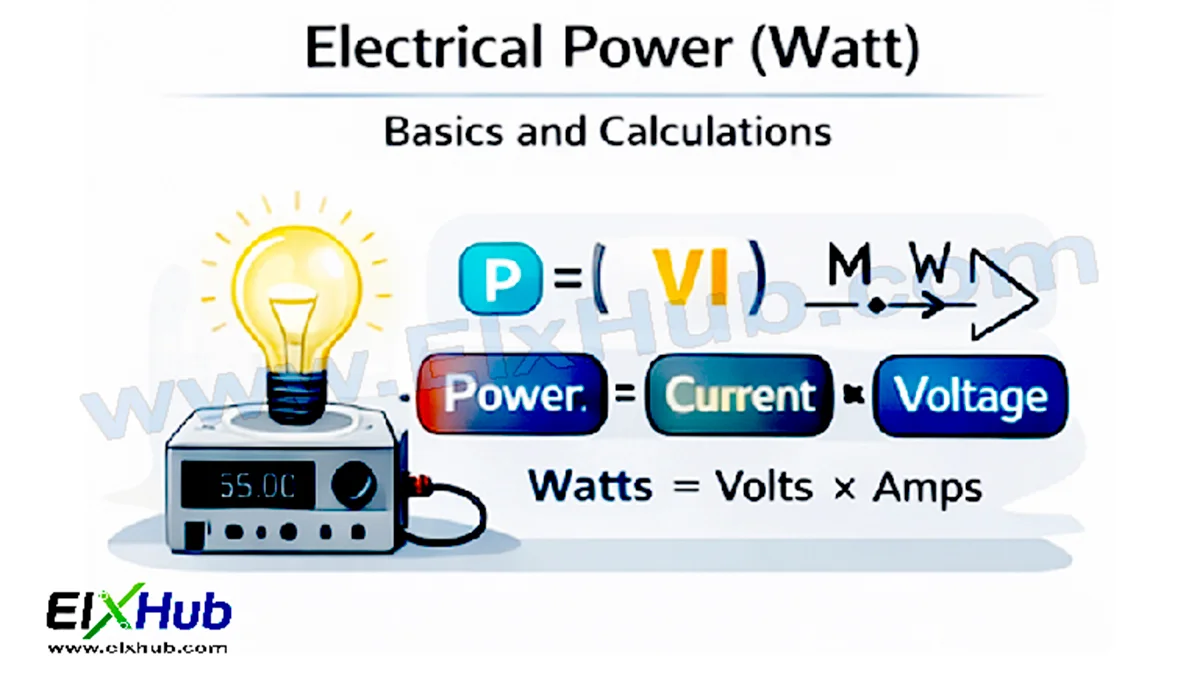
Power = Voltage × Current
In symbols:
- P = V × I
Where:
- P is power in watts
- V is voltage in volts
- I is current in amperes
This formula applies to DC circuits and is the foundation of power calculations.
Power Calculation in DC Circuits
In DC circuits, voltage and current are constant, making power calculations straightforward.
Example:
- Voltage = 12 V
- Current = 2 A
Power:
- P = 12 × 2
- P = 24 W
This means the circuit consumes 24 watts of power.
You can use our Power Calculator for your power calculations.
Power Formula Using Resistance
Using Ohm’s Law, power can also be expressed in terms of resistance.
From Ohm’s Law:
- V = I × R
Power formulas become:
- P = I² × R
- P = V² ÷ R
These formulas are useful when voltage or current is not directly known.
You can easily use “Ohm’s Law Calculator” to achieve the correct values of Volt, Current or Resistor.
| Known Quantity | Power Formula |
|---|---|
| Voltage and Current | P = V × I |
| Current and Resistance | P = I² × R |
| Voltage and Resistance | P = V² ÷ R |
Power Dissipation in Resistors
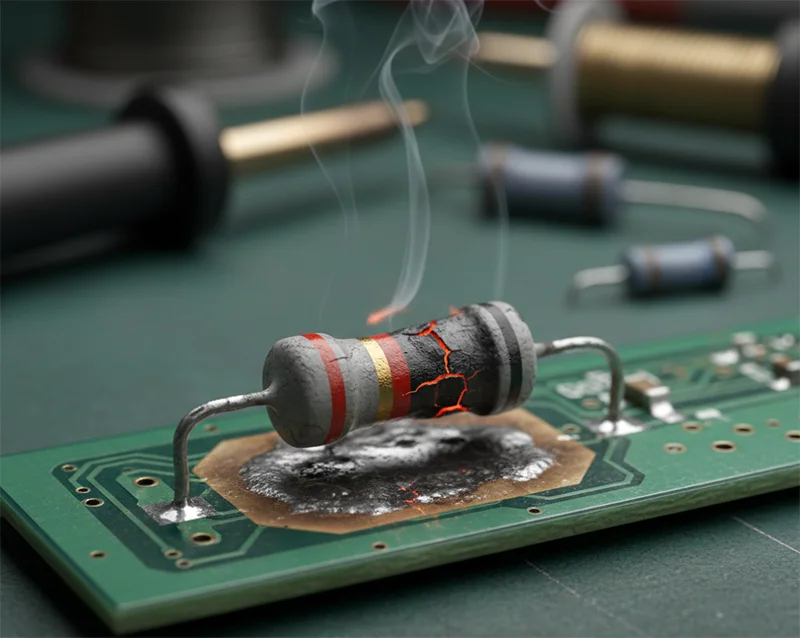
When current flows through a resistor, electrical energy is converted into heat. This is called power dissipation.
Every resistor has a power rating, which indicates how much power it can safely dissipate without damage.
If the dissipated power exceeds the rating:
- The resistor may overheat
- Its value may change
- It may burn or fail
For more information on Resistors, you can visit our tutorial “Resistors – Types, Uses, and Working” and to calculate ‘Heat in Watts’ use our “Power Dissipation” calculator.
Power Rating of Electrical Components
Electrical components are rated to handle a certain amount of power safely.
Examples:
- Resistors: 0.25 W, 0.5 W, 1 W
- LEDs: Limited power dissipation
- Transistors: Power dissipation limits
- Motors: Rated power output
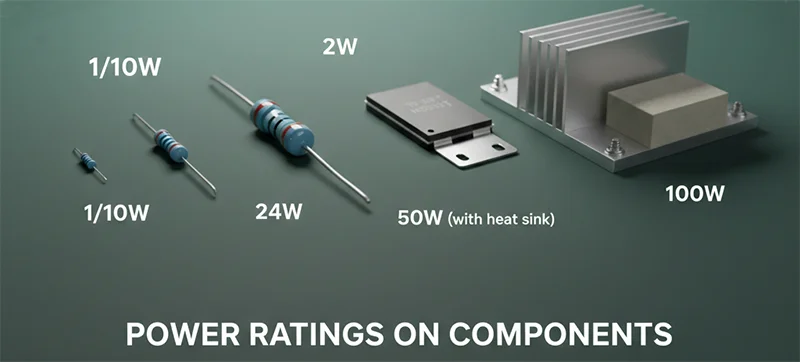
| Component | Typical Power Rating |
|---|---|
| Small resistor | 0.25 W |
| Power resistor | 5 W or more |
| LED | Very low |
| Electric motor | High |
Electrical Power in AC Circuits
In AC circuits, power calculation is more complex because voltage and current vary with time.
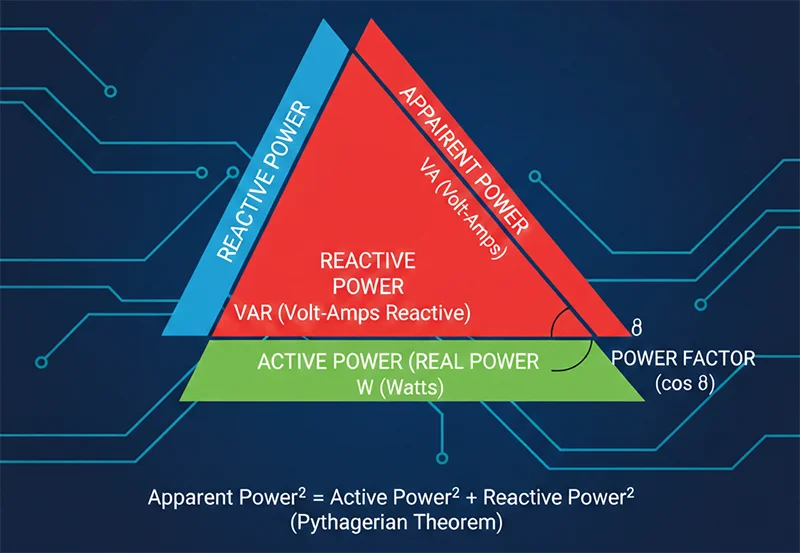
There are three types of power in AC systems:
- Active (real) power
- Reactive power
- Apparent power
Active Power
Active power is the actual power consumed and converted into useful work.
Unit:
- Watt (W)
Reactive Power
Reactive power flows back and forth between source and load.
Unit:
- Volt-Ampere Reactive (VAR)
Apparent Power
Apparent power is the product of RMS voltage and RMS current.
Unit:
- Volt-Ampere (VA)
| Power Type | Symbol | Unit |
|---|---|---|
| Active | P | Watt |
| Reactive | Q | VAR |
| Apparent | S | VA |
Power Factor
Power factor indicates how efficiently power is being used in an AC circuit.
Power factor = Active Power ÷ Apparent Power
It ranges from:
- 0 to 1
A higher power factor means better efficiency.
Electrical Energy vs Electrical Power
Electrical power should not be confused with electrical energy.
- Power is the rate of energy usage
- Energy is the total amount of power used over time
Electrical energy is measured in:
- Watt-hour (Wh)
- Kilowatt-hour (kWh)
Example:
- A 100 W bulb running for 10 hours
- Energy = 100 × 10 = 1000 Wh = 1 kWh
Household Power Consumption
Electrical appliances are rated in watts.
Examples:
- LED bulb: Low power
- Fan: Moderate power
- Heater: High power
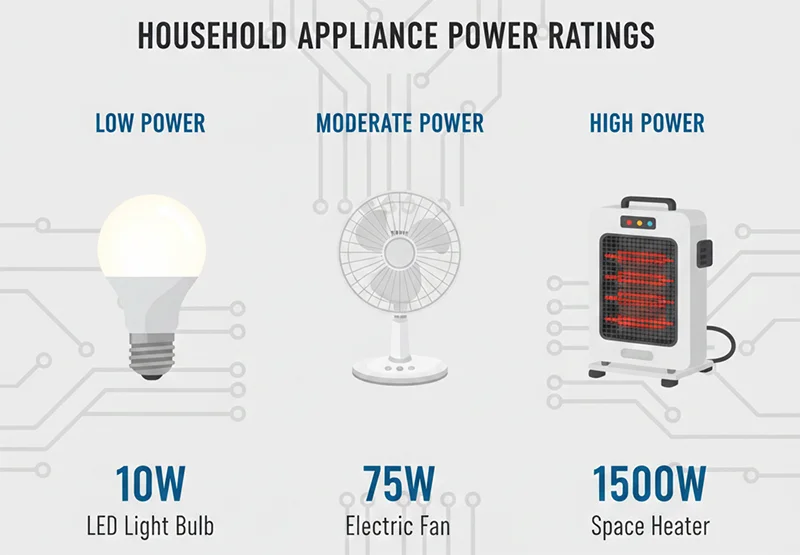
| Appliance | Typical Power |
|---|---|
| LED bulb | Low |
| Ceiling fan | Moderate |
| Electric heater | High |
Power Efficiency
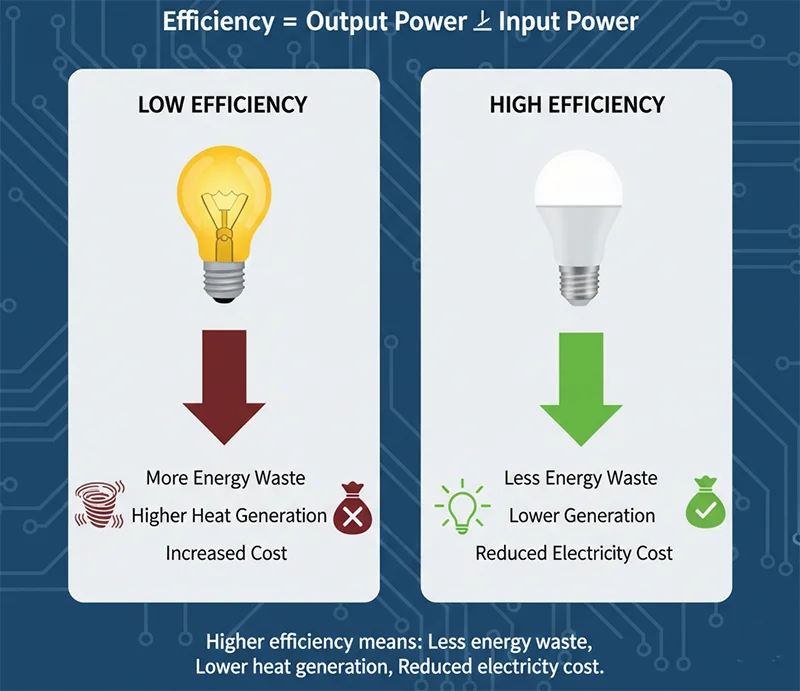
Efficiency indicates how much input power is converted into useful output.
Efficiency = Output Power ÷ Input Power
Higher efficiency means:
- Less energy waste
- Lower heat generation
- Reduced electricity cost
Electrical Power Losses
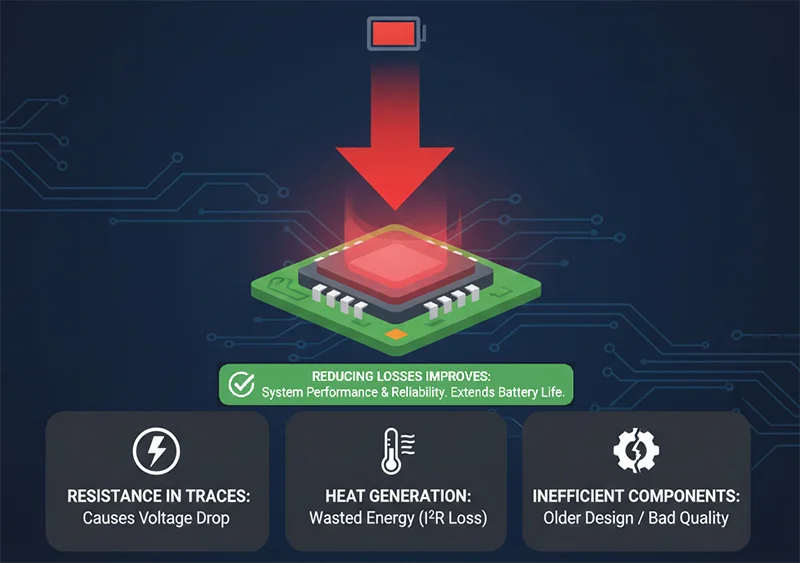
Power losses occur due to:
- Resistance in wires
- Heat generation
- Inefficient components
Importance of Electrical Power Calculations
Correct power calculations help in:
- Selecting components
- Preventing overheating
- Designing power supplies
- Improving safety
- Reducing energy waste

Safety Considerations Related to Power
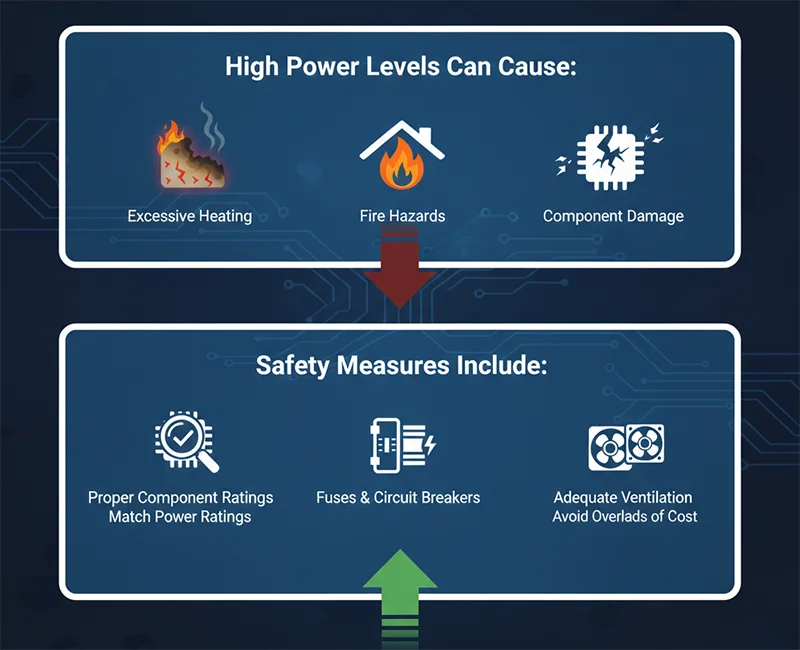
High power levels can cause:
- Excessive heating
- Fire hazards
- Component damage
Safety measures include:
- Proper component ratings
- Fuses and circuit breakers
- Adequate ventilation
You can visit our our tutorial “Basic Electrical Safety Rules” for more information.
Practical Examples of Power Calculations
Example 1:
- Voltage = 230 V
- Current = 0.5 A
- Power = 115 W
Example 2:
- Resistance = 100 Ω
- Voltage = 20 V
- Power = 4 W
Power Measurement Instruments
Electrical power can be measured using:
- Watt meters
- Power analyzers
- Energy meters
Conclusion
Electrical power is a fundamental concept that connects voltage, current, energy, and efficiency in electronics. Understanding how power is calculated, rated, and managed allows beginners to design safe circuits, select proper components, and interpret electrical ratings confidently. From simple resistors to complex electrical systems, power plays a crucial role in performance, reliability, and safety.
By mastering electrical power basics and calculations, you build a strong foundation for advanced topics such as power electronics, energy systems, and electrical machine control. Power knowledge is not just theoretical—it is a practical skill used every day in real-world electronics and electrical applications.
SEO Title: Electrical Power Explained – Watt Basics, Formulas, and Calculations
Meta Description: Learn electrical power fundamentals, watt calculations, DC and AC power, efficiency, energy consumption, and safety with clear beginner-friendly explanations.


