
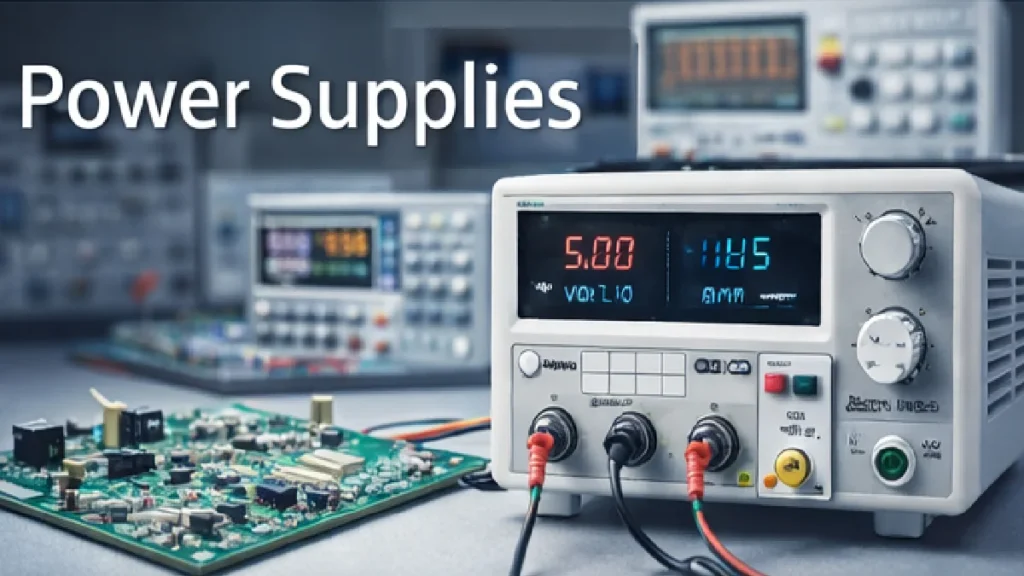
Power supplies are one of the most essential tools in any electronics laboratory. Whether you are a student learning basic electronics, a hobbyist building DIY circuits, or a professional engineer testing complex systems, a reliable power supply is critical for safe and accurate experimentation. Without a stable power source, even the best-designed electronic circuit cannot function correctly.
In this guide, we will explore what power supplies are, how they work, their different types, key specifications, safety considerations, and how to choose the right power supply for your electronics lab. This tutorial is part of Electronics Lab Tools and is designed to give you both conceptual understanding and practical knowledge.
What Is a Power Supply?
A power supply is an electronic device that provides electrical energy to one or more loads. Its primary function is to convert electrical power from a source (such as AC mains or a battery) into the correct voltage, current, and form required by the load.
In electronics labs, power supplies are mainly used to:
- Power electronic circuits during testing
- Provide adjustable voltage and current
- Protect sensitive components from damage
- Simulate real-world operating conditions
Unlike batteries, lab power supplies offer controlled, adjustable, and continuous power, making them ideal for experimentation and troubleshooting.

Why Power Supplies Are Important in Electronics Labs
Power supplies play a vital role in ensuring both performance and safety in electronics work. Using an incorrect or unstable power source can lead to circuit malfunction, inaccurate measurements, or permanent damage to components.
Key reasons power supplies are important:
- Provide stable and regulated voltage
- Allow current limiting to protect components
- Enable testing under different voltage levels
- Improve accuracy in circuit behavior analysis
- Reduce risk of overheating and short circuits
For beginners especially, a good lab power supply can prevent costly mistakes and improve learning outcomes.
Basic Working Principle of a Power Supply
At a fundamental level, most power supplies follow a similar internal structure:
- Input Stage – Accepts power from AC mains or DC source
- Transformation – Steps voltage up or down (mainly in AC supplies)
- Rectification – Converts AC to DC (if required)
- Filtering – Smooths the DC output
- Regulation – Maintains a constant output voltage
- Protection – Prevents overload, short circuit, or overheating
Each stage contributes to delivering clean, usable power to the output terminals.
Types of Power Supplies
Power supplies can be classified in several ways depending on design, application, and output characteristics.
1. Linear Power Supplies
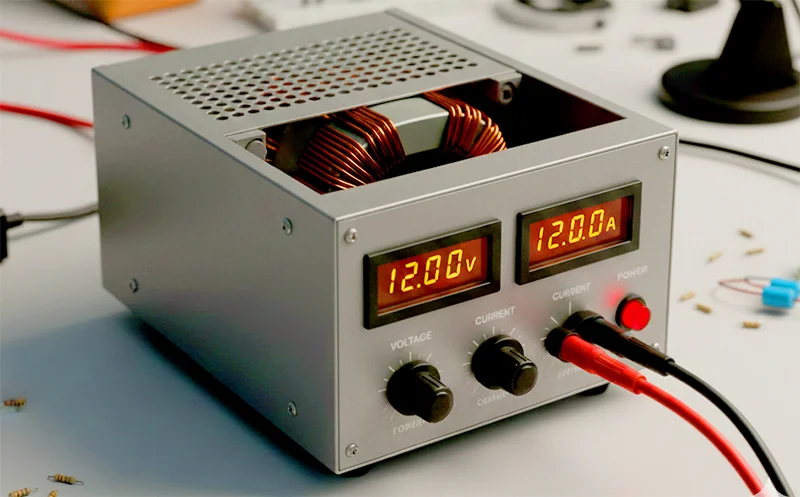
Linear power supplies use transformers and linear regulators to produce a stable output. They are known for their simplicity and low noise.
Advantages
- Very low output ripple
- Simple design
- Reliable for sensitive analog circuits
Disadvantages
- Low efficiency
- Large size and weight
- Generates more heat
2. Switching Power Supplies (SMPS)
Switching power supplies use high-frequency switching techniques to regulate voltage efficiently.
Advantages
- High efficiency
- Compact size
- Lightweight
Disadvantages
- More complex circuitry
- Higher electrical noise
- Requires proper filtering
SMPS units are commonly used in modern electronics due to their efficiency.
3. Regulated vs Unregulated Power Supplies
| Feature | Regulated | Unregulated |
|---|---|---|
| Output Stability | High | Low |
| Voltage Variation | Minimal | Varies with load |
| Cost | Higher | Lower |
| Lab Usage | Preferred | Limited |
In electronics labs, regulated power supplies are almost always recommended.
4. Fixed vs Variable Power Supplies
- Fixed Power Supplies provide a constant output (e.g., 5V, 12V).
- Variable Power Supplies allow adjustment of voltage and sometimes current.
Variable supplies are ideal for experimentation and prototyping.
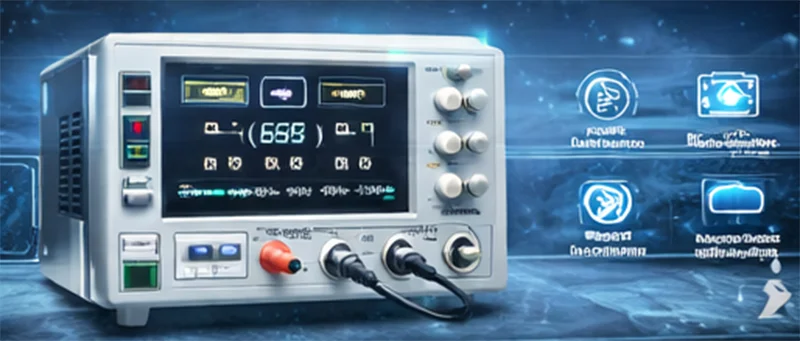
Bench Power Supplies (Lab Power Supplies)
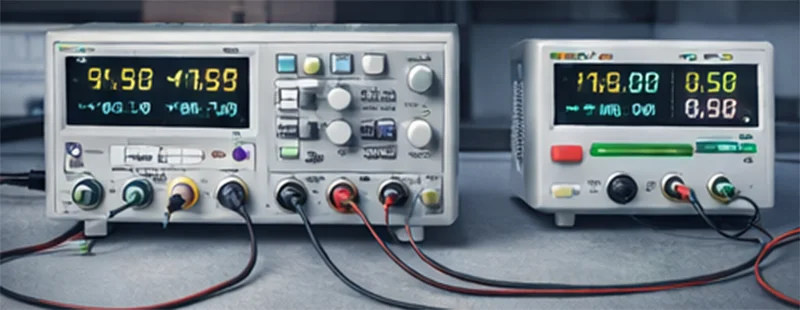
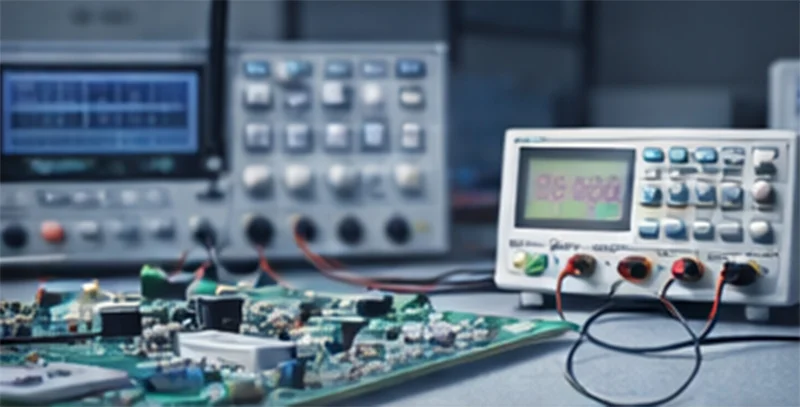
Bench power supplies are specifically designed for laboratory use. They usually include:
- Adjustable voltage and current
- Digital displays
- Current limiting
- Short-circuit protection
- Multiple output channels
These features make them indispensable tools for electronics students and professionals.
Key Specifications of Power Supplies
Understanding specifications helps you choose the right power supply for your needs.
Common Specifications Explained
| Specification | Description |
|---|---|
| Output Voltage | Range of voltage provided |
| Output Current | Maximum current capability |
| Power Rating | Total output power |
| Regulation | Ability to maintain stable output |
| Ripple & Noise | AC components on DC output |
| Efficiency | Ratio of output power to input power |
| Protection Features | Over-voltage, over-current, thermal |
Always match these specifications with your circuit requirements.
Current Limiting – A Critical Safety Feature
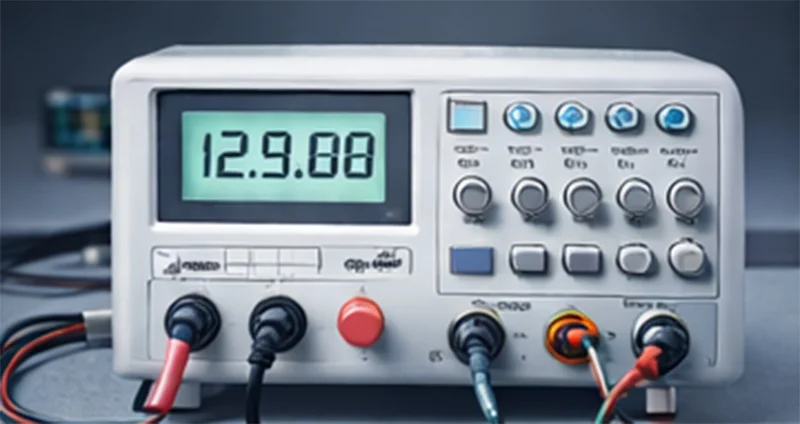
Current limiting prevents excessive current flow when a fault occurs. This feature is especially useful when testing new circuits.
Benefits of current limiting:
- Protects ICs and transistors
- Prevents overheating
- Helps diagnose short circuits
- Improves experiment safety
Most modern lab power supplies include adjustable current limiting.
Single, Dual, and Triple Output Power Supplies
Power supplies may offer one or more independent outputs.
- Single Output – Basic experiments
- Dual Output – Positive and negative rails
- Triple Output – Multiple voltage needs
Dual and triple output supplies are common in analog and op-amp circuits.
Power Supply Safety Guidelines
Working with power supplies requires caution, especially at higher voltages.
Safety Tips
- Always start with minimum voltage
- Use current limiting
- Never short output terminals intentionally
- Ensure proper grounding
- Turn off supply before changing connections
Following safety rules protects both you and your equipment.
Common Applications of Power Supplies
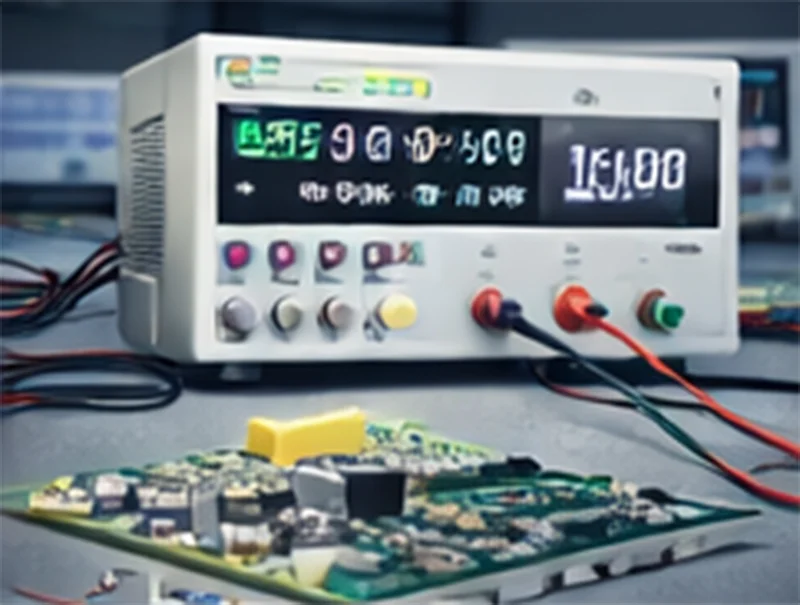
Power supplies are used in many electronics tasks, including:
- Circuit prototyping
- Component testing
- Microcontroller projects
- Audio amplifier testing
- Power electronics experiments
They form the backbone of every electronics lab setup.
How to Choose the Right Power Supply for Your Lab
When selecting a power supply, consider:
- Voltage and current requirements
- Type of circuits you work with
- Noise sensitivity
- Budget and future expansion
For beginners, a variable regulated bench power supply with current limiting is usually the best choice.
Power Supplies vs Batteries
| Feature | Power Supply | Battery |
|---|---|---|
| Voltage Stability | High | Drops over time |
| Adjustability | Yes | No |
| Continuous Operation | Yes | Limited |
| Lab Use | Ideal | Limited |
Batteries are useful for portable projects, but power supplies are superior for lab work.

Future Trends in Power Supplies
Modern power supplies are becoming smarter and more efficient. Trends include:
- Digital control interfaces
- USB and network connectivity
- Higher efficiency designs
- Compact modular supplies
- Smart protection systems
These advancements improve usability and precision in electronics labs.
Conclusion
Power supplies are fundamental electronics lab tools that enable safe, controlled, and accurate testing of electronic circuits. From simple linear supplies to advanced switching and bench power supplies, each type serves a specific purpose. Understanding their working principles, specifications, and safety considerations is essential for anyone involved in electronics.
By choosing the right power supply and using it correctly, you can significantly improve your learning experience, project success, and equipment longevity.
Featured Image
- Filename: power_supplies_featured.jpg
- Description: Modern laboratory bench power supply connected to electronic circuits
- Usage: Article featured image (1200×675)


