

Introduction
An oscilloscope is one of the most essential electronic test and measurement instruments used to visualize electrical signals over time. Unlike a multimeter, which only provides numerical readings, an oscilloscope displays waveforms, allowing engineers, technicians, students, and hobbyists to observe voltage changes, timing relationships, frequency, noise, and signal distortions in real time.
Oscilloscopes are widely used in electronics design, power electronics, telecommunications, automotive diagnostics, embedded systems, medical equipment testing, and research laboratories. Whether you are debugging a microcontroller circuit, analyzing an audio signal, or inspecting high-speed digital communication lines, an oscilloscope provides insights that no other tool can match.
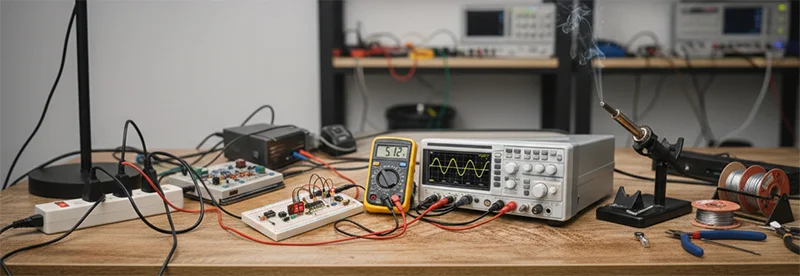
Basic Working Principle of an Oscilloscope
An oscilloscope works by sampling an electrical signal and plotting it on a screen, with voltage on the vertical (Y) axis and time on the horizontal (X) axis. The signal enters through the input probe, is conditioned internally, and then displayed as a waveform.
Key internal stages include:
• Input attenuation and amplification
• Triggering system
• Time base generator
• Analog-to-digital conversion (for digital oscilloscopes)
• Display processing
By adjusting scale controls, users can zoom in on fine signal details or view long-duration waveforms. The trigger system ensures waveform stability by synchronizing the display to a specific point on the signal.

Types of Oscilloscopes
Oscilloscopes come in several types, each designed for specific applications.
Analog Oscilloscopes
Analog oscilloscopes use cathode ray tubes (CRT) and directly display signals without digital processing. They are now mostly obsolete but still valued for real-time signal behavior without sampling artifacts.
Digital Storage Oscilloscopes (DSO)
DSOs convert signals into digital data, store them in memory, and display them on LCD screens. They allow waveform storage, measurements, screenshots, and advanced analysis.
Digital Phosphor Oscilloscopes (DPO)
DPOs improve waveform intensity grading and signal persistence, making them ideal for analyzing signal variations and jitter.
Mixed Signal Oscilloscopes (MSO)
MSOs combine analog channels with digital logic analyzer channels, perfect for debugging microcontroller and embedded systems.
Handheld Oscilloscopes
Portable, battery-powered oscilloscopes used for field diagnostics and industrial maintenance.

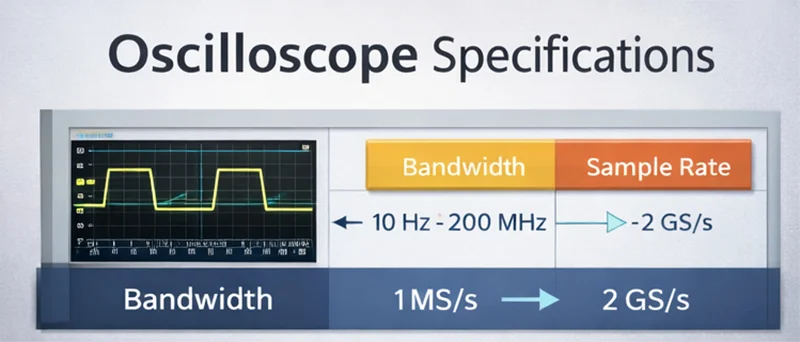
Key Oscilloscope Specifications Explained
Understanding oscilloscope specifications is crucial when selecting the right model.
Bandwidth
Defines the maximum frequency the oscilloscope can accurately measure. Higher bandwidth is required for high-speed digital signals.
Sample Rate
Indicates how many samples per second the oscilloscope can capture. A higher sample rate provides better waveform accuracy.
Number of Channels
Most oscilloscopes offer two or four channels, allowing simultaneous comparison of multiple signals.
Memory Depth
Determines how much waveform data can be stored. Deeper memory enables long captures at high resolution.
Vertical Resolution
Measured in bits, it affects signal amplitude accuracy.
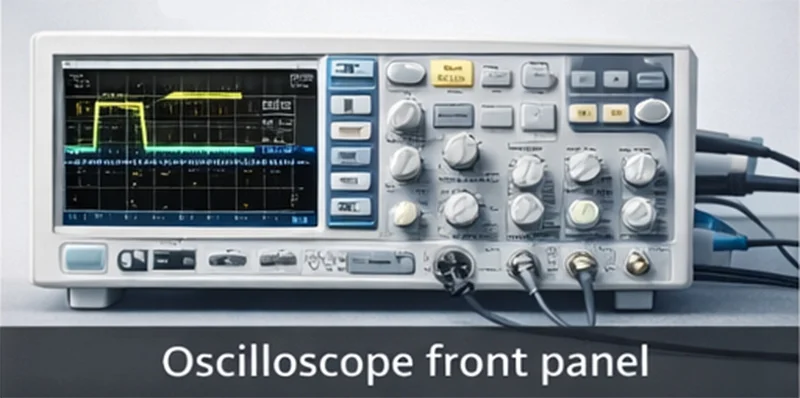
Oscilloscope Controls and Front Panel Overview
The front panel of an oscilloscope includes several important controls:
• Vertical scale (Volts/Div)
• Horizontal scale (Time/Div)
• Trigger level and mode
• Channel selection buttons
• Measurement and math functions
Modern oscilloscopes also include touchscreens, USB ports, LAN connectivity, and waveform analysis software.
Probes and Their Importance
Oscilloscope probes are just as important as the oscilloscope itself. Incorrect probe selection can distort measurements.
Common Probe Types
• Passive probes
• Active probes
• Differential probes
• Current probes
Proper probe compensation ensures accurate signal representation and minimizes loading effects.

Common Measurements Using an Oscilloscope
Oscilloscopes can measure a wide range of signal parameters:
• Voltage amplitude
• Frequency and period
• Rise and fall time
• Duty cycle
• Phase difference
• Signal noise and ripple
Advanced models also support FFT analysis for frequency-domain inspection.

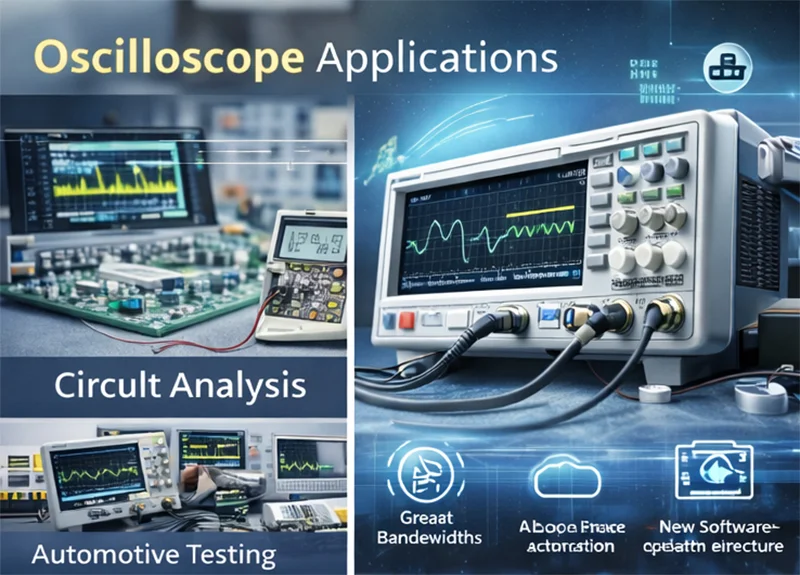
Applications of Oscilloscopes
Oscilloscopes are used across many industries:
• Electronics circuit debugging
• Power supply analysis
• Audio signal testing
• Automotive ECU diagnostics
• Communication signal analysis
• Medical equipment testing
Their ability to reveal invisible electrical behavior makes them indispensable.
Oscilloscope Safety Guidelines
When using an oscilloscope, safety is critical:
• Always check voltage ratings
• Use proper grounding techniques
• Avoid probing live high-voltage circuits without isolation
• Use differential probes when required
Incorrect usage can damage equipment or cause injury.

Choosing the Right Oscilloscope
When selecting an oscilloscope, consider:
• Application requirements
• Signal frequency range
• Number of channels needed
• Budget constraints
• Future expandability
For beginners, a basic DSO is sufficient, while professionals may require MSO or DPO models.
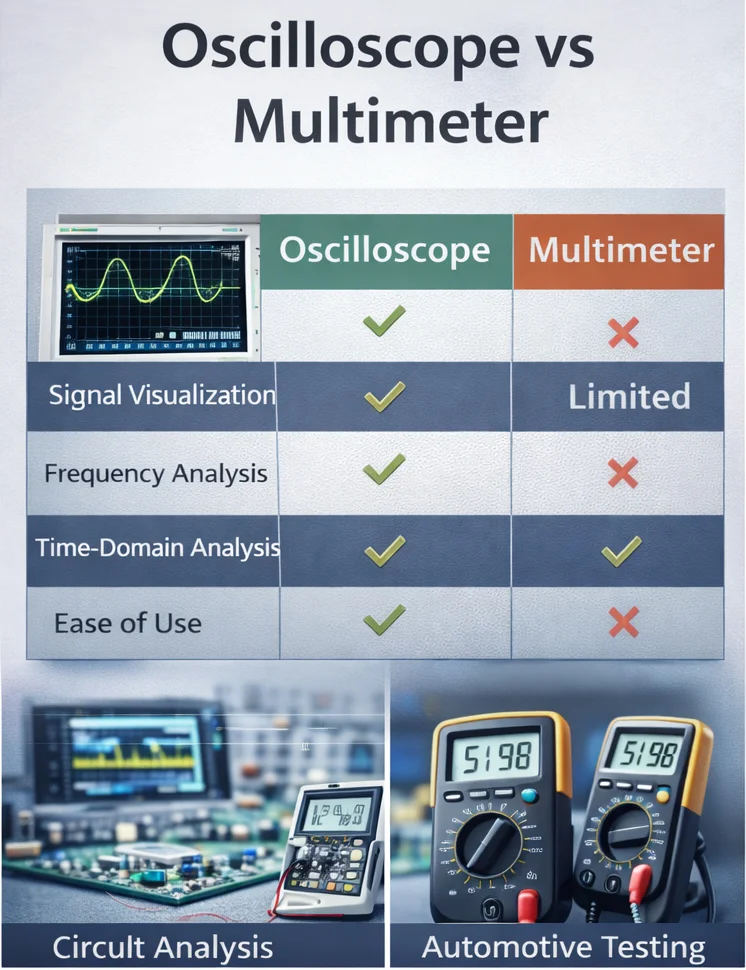
Oscilloscope vs Multimeter
While both tools measure electrical parameters, they serve different purposes.
| Feature | Oscilloscope | Multimeter |
|---|---|---|
| Signal visualization | Yes | No |
| Frequency analysis | Detailed | Limited |
| Time-domain analysis | Yes | No |
| Ease of use | Moderate | Easy |
Both instruments complement each other in electronics work.
Future Trends in Oscilloscope Technology
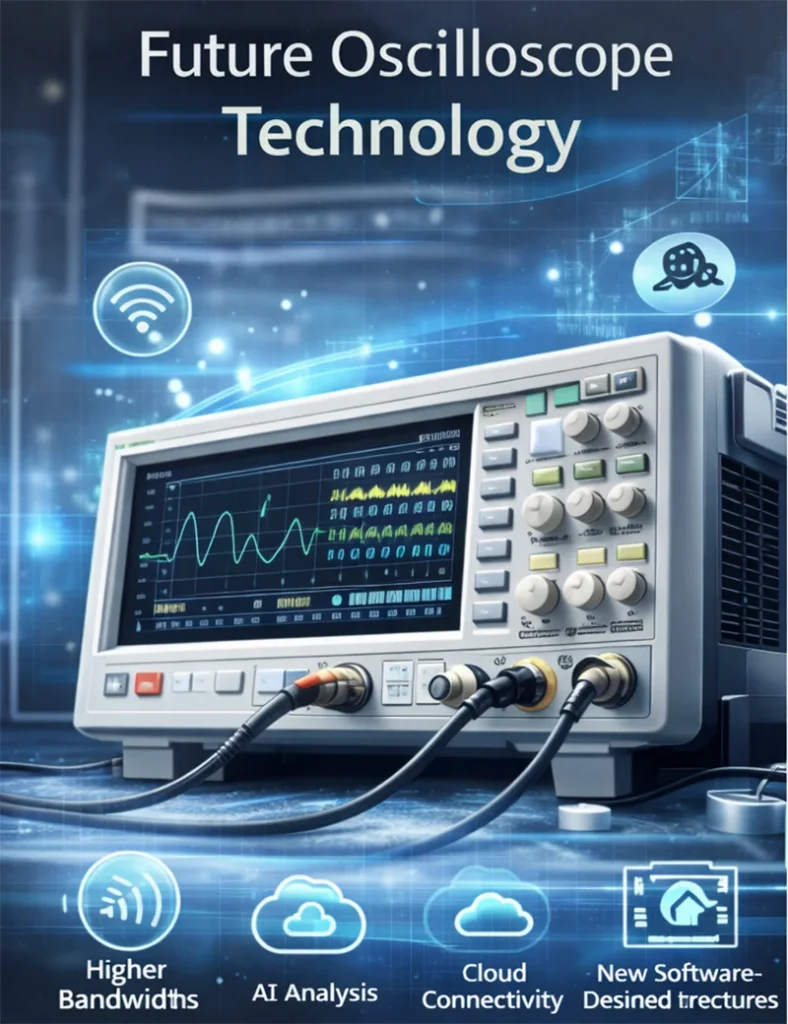
Modern oscilloscopes continue to evolve with:
• Higher bandwidths
• AI-assisted signal analysis
• Cloud connectivity
• Software-defined architectures
These advancements are pushing oscilloscopes beyond traditional testing into intelligent diagnostic tools.
Conclusion
An oscilloscope is an essential instrument for anyone working with electronics. From basic signal observation to advanced debugging and analysis, it provides unmatched visibility into electrical behavior. Understanding how oscilloscopes work, their specifications, and proper usage enables engineers and hobbyists to diagnose problems faster and design better systems.


